Spending the year with new(ish) books by friends, locals, and other Canadian poets old and new. Follow along daily on Instagram.
We’re continuing this week re-reading some Canadian short-listed and award winning books of the past few years as a kind of minor rebuke of the Griffin Prize Trust folks and the complete lack of Canadian books on this year’s long and short lists.
The key to this book is to think of it as a kind of ekphrastic. Unlike traditional ekphrastics though, which describe a piece of art generally by starting wide and narrowing in, “An Oak Hunch” starts zoomed all the way in – disorientingly so. This book throws fractured details, images that don’t seem to make any logical sense on their own, at you incessantly. It is only after you have finished the entire book and started back again that patterns, narratives, start to emerge. I hesitate to go full impressionistic here but that is a useful lever with which to enter this book.
“An Oak Hunch” needs you to read it more than once before it starts to give up its juice. The effort though is worth the squeeze.
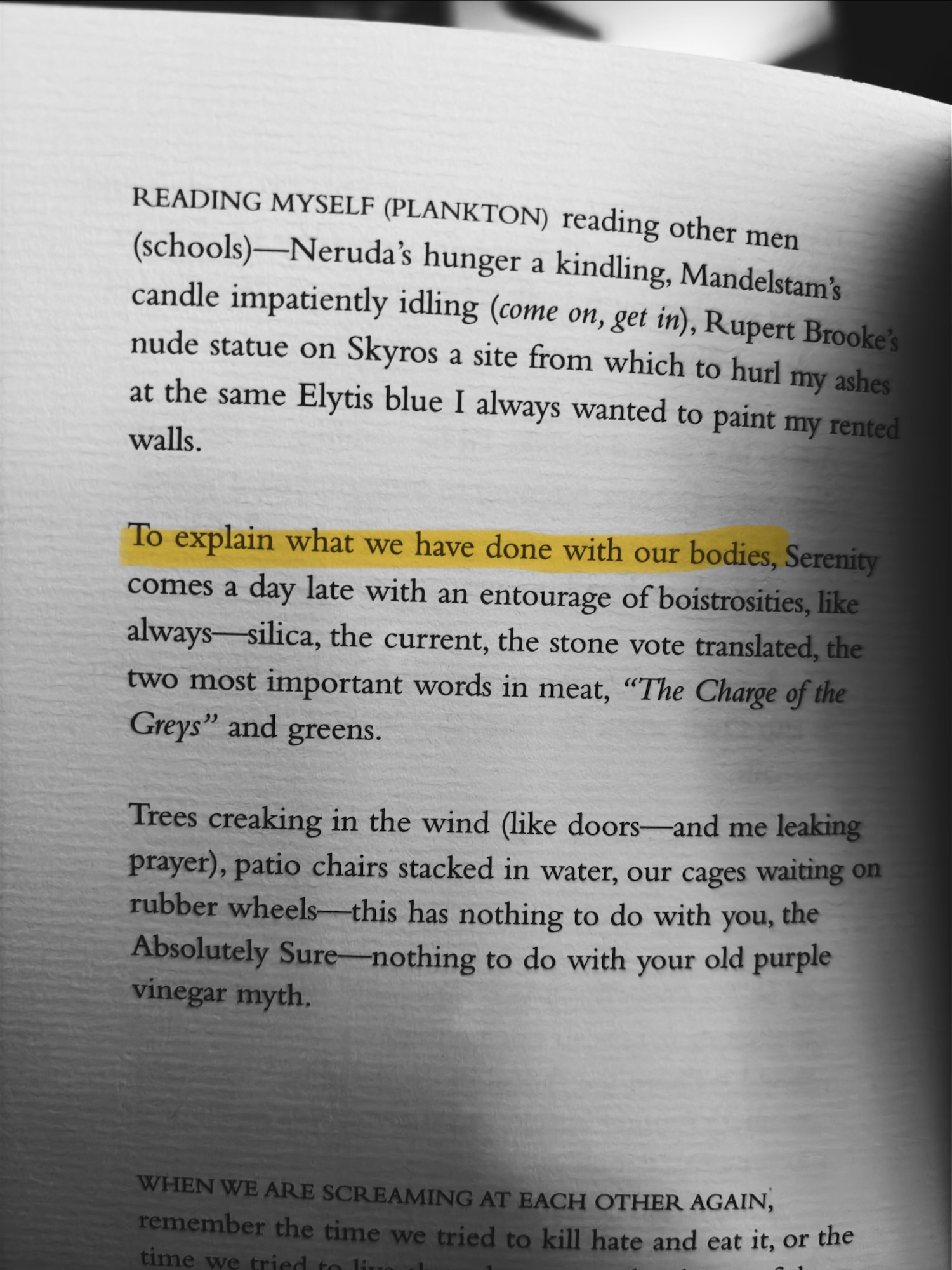
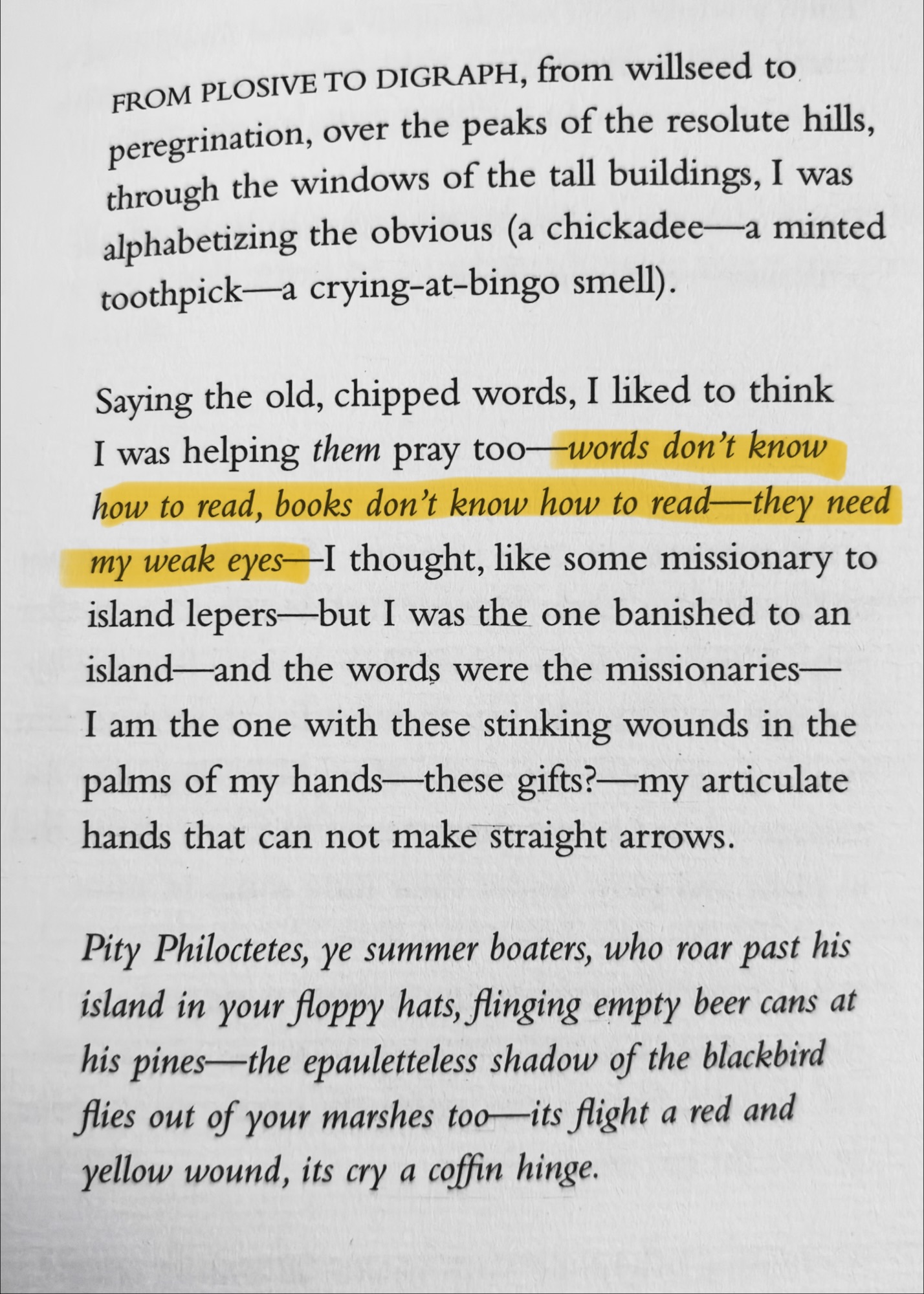
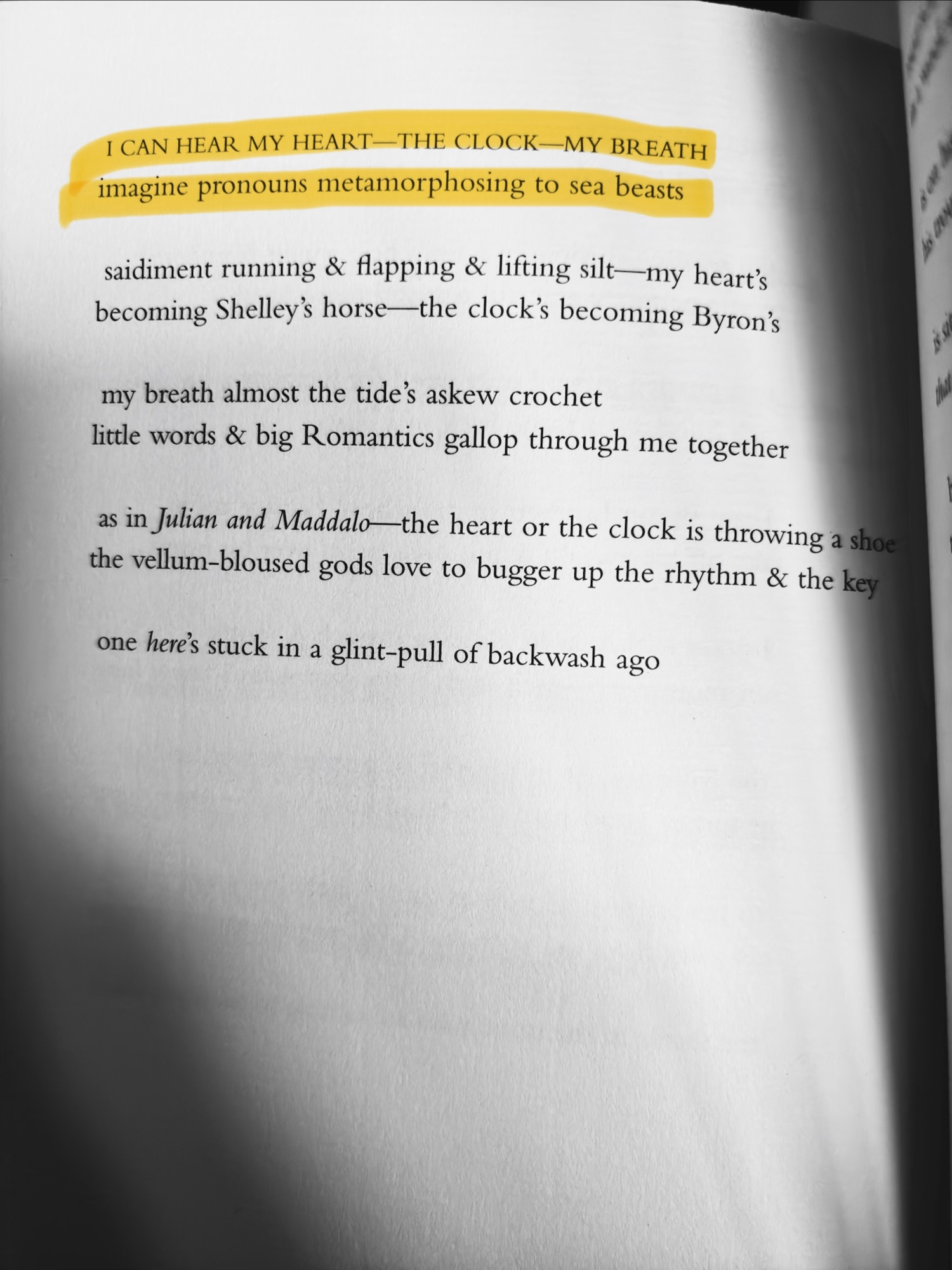
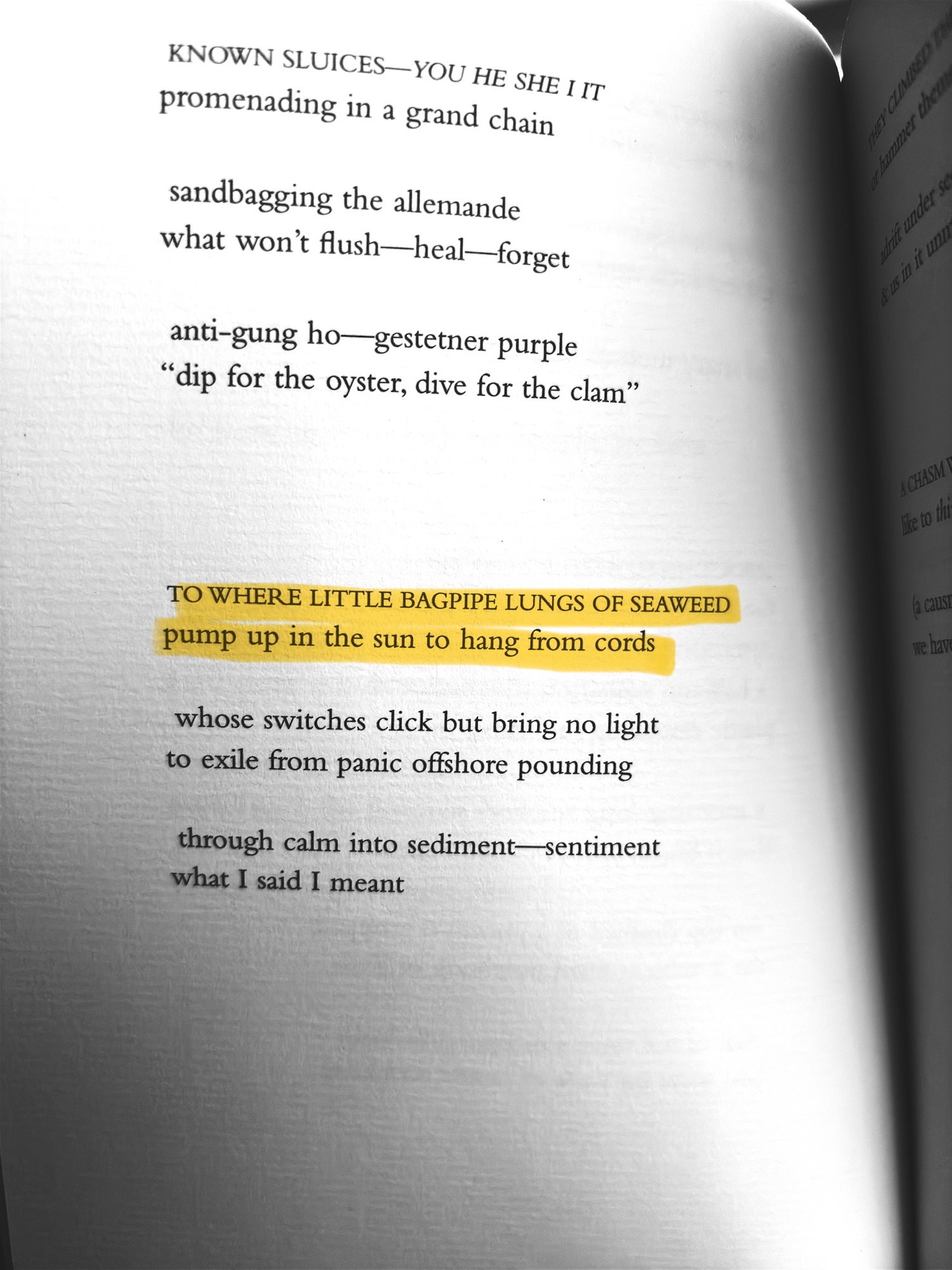
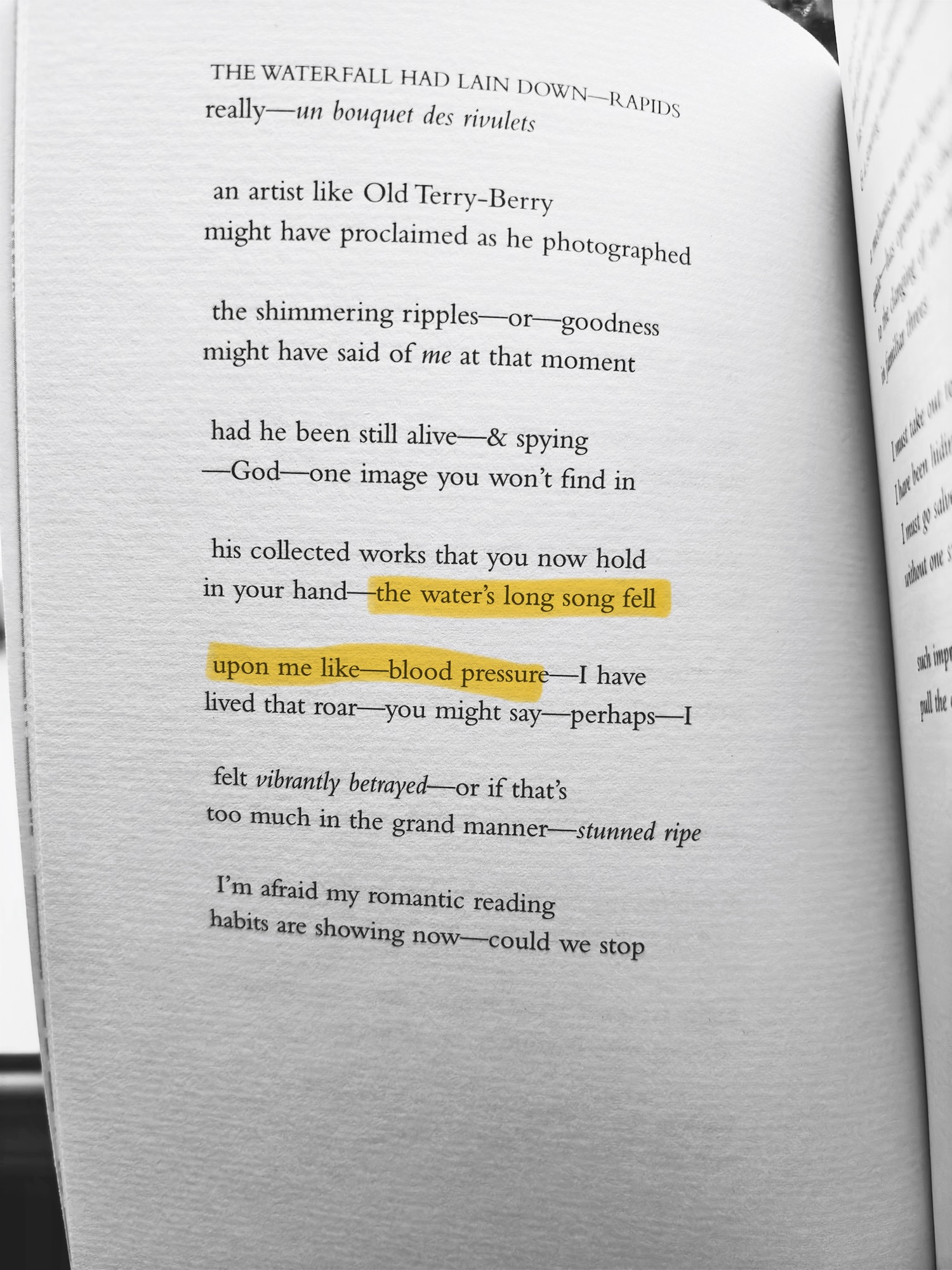
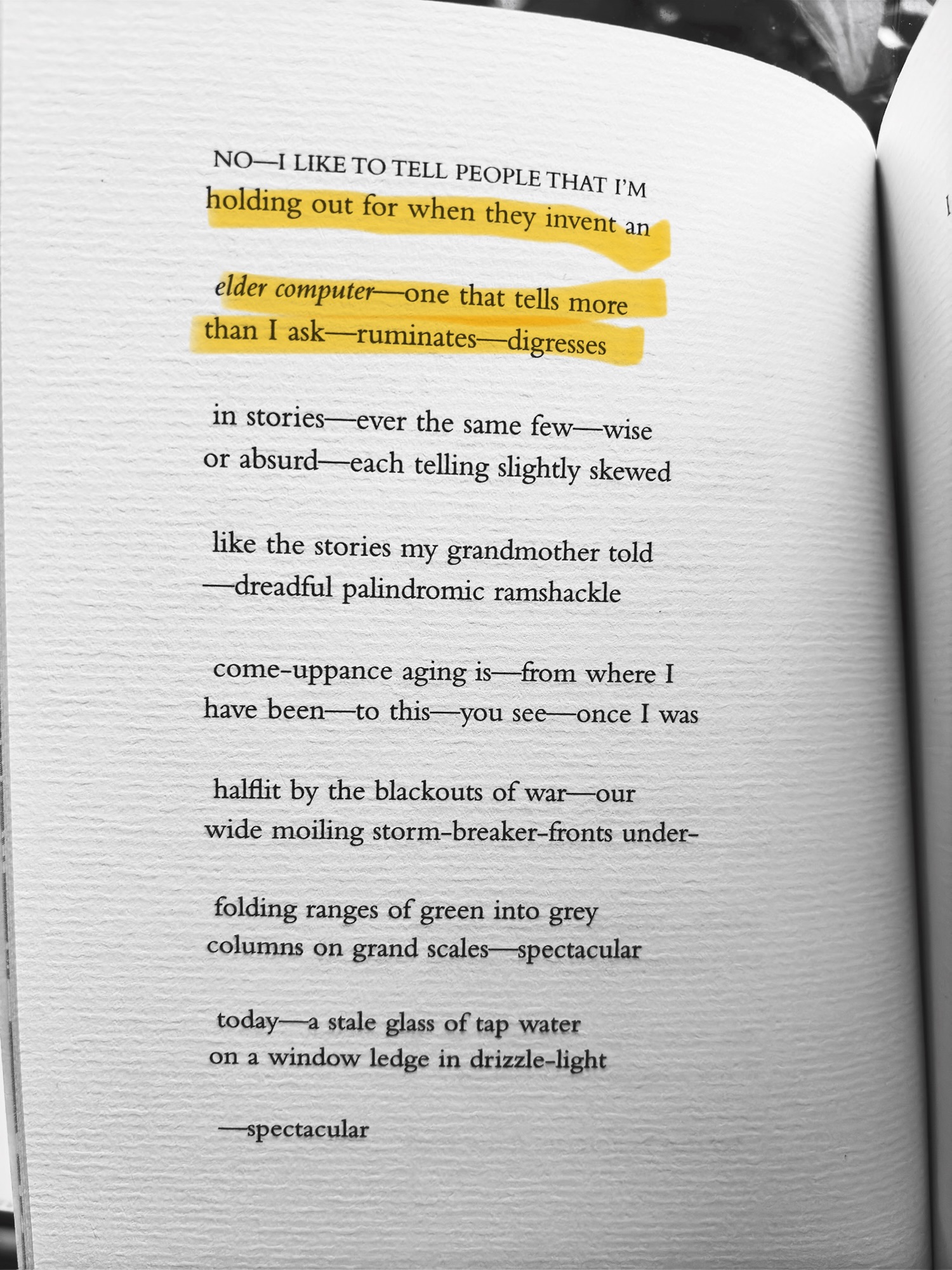
The photos from my week of slow reading are below. I’ll let you discover the rest of the poems on your own. I will draw your attention though to one more aspect of this book that I find interesting. Note how most of the poem’s titles serve as their first lines. Or is it the other way around? Sometimes this has the effect of making the text read more like narrative than poetry. At other times this looks like the poetic approach we’ve seen many times before. Together though, these two different ways of jamming title and text together are another tool to destabilize the reader. To jar you out of your usual reading habits and look for different patterns. I found myself paying particular attention to this as I read and marvelled at Phil’s technical skill. This is a man who knows what he is doing.
This is what has been driving my creativity this week: saving books by reading, saving words with eyes which are as weak as any.


Leave a Reply